The Suno Detective Music Prompts That Actually Hold the Mood
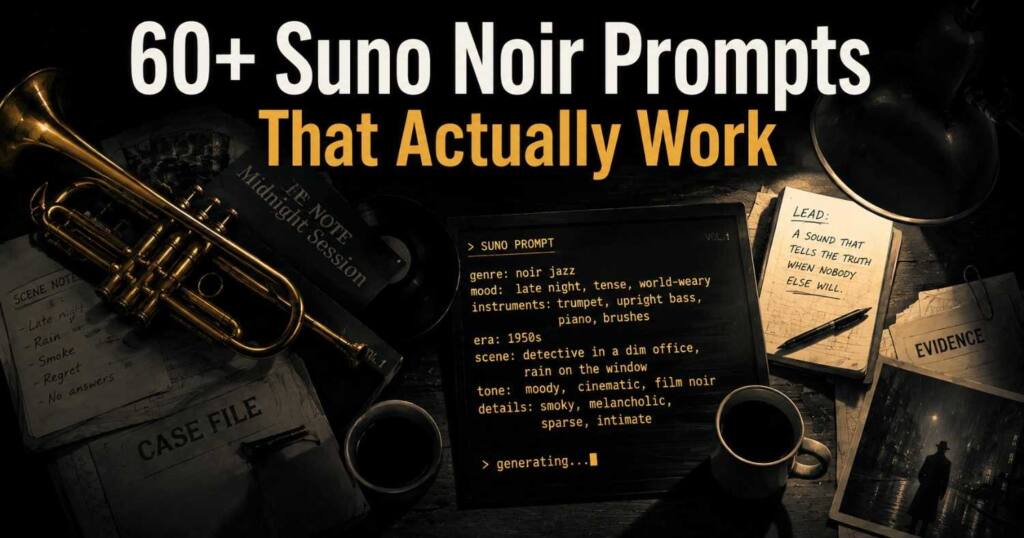
Most Suno prompts for noir sound like a film score had a panic attack. These ones don’t.
Stop wasting your Suno credits on unpredictable outputs and start generating exactly what you want on the first try. I just launched the Ultimate Suno AI Prompt Pack, featuring a mastery guide and 1,000 battle-tested prompts structured in a developer-ready JSON database. Grab it today to plug these proven formulas directly into your AI music workflow.
You’ve typed something like “detective jazz noir mysterious instrumental” into Suno. You hit generate. What comes back is either a clunky, overbright jazz loop or something so generically dark it could soundtrack a grocery store on Halloween.
That’s not a Suno problem. That’s a prompt anatomy problem.
Detective and noir music is one of the hardest moods to land in AI music generators because it sits at a very specific intersection: jazz tonality + cinematic tension + emotional restraint + period-specific texture. Miss one of those and the whole thing collapses. You end up with either a lounge track or a horror score, and neither is what you wanted.
This guide fixes that. It covers every major sub-mood under the “detective” umbrella, explains what’s actually doing the work inside each prompt, and gives you 60+ copy-paste templates organized by use case. No filler. No generic advice. Just prompts that hold the atmosphere from bar one to the end.
Why Generic “Noir” Prompts Keep Failing
Go back to what the HookGenius and Undetectr guides both get right and wrong at the same time. They give you starter prompts like:
jazz noir, smoky, muted trumpet, walking bass, brush drums, film noir, 1940s detective, mysterious, rainy night, instrumental
That works. It’s a fine starting point. But it’s only one texture, and it produces the same sonic space every time. For many creators, that’s enough. For YouTubers, podcast producers, lo-fi channel operators, or game developers, it isn’t.
Here’s what those guides don’t tell you: Suno reads prompts the way a film director reads a call sheet. Every tag you add is a casting decision. “Muted trumpet” is a character. “Walking bass” sets the pace of the scene. “Brush drums” establishes the room. When you keep the same cast for every project, you get the same movie.
The fix is understanding which tags steer which dimension of the output, then swapping intentionally depending on what you’re building.
The Five Dimensions Every Detective Prompt Should Address
Before the templates, this framework will make everything click.
1. Era anchor — Suno has internalized whole sonic periods. “1940s” pulls toward acoustic jazz with period recording warmth. “1970s” brings fuzz and grain. “Modern neo-noir” opens up synth textures and bitcrushed processing. Name the decade, not just the genre.
2. Instrument lead — Whatever instrument you name first tends to carry the melody. “Muted trumpet” leads. “Solo saxophone” leads. “Low piano” leads. Put the one you want out front, first.
3. Tension type — This is the gap most guides miss. There are at least three distinct tension types in detective music:
- Investigative tension (methodical, slow-burn, pizzicato strings, low piano, pacing rhythm)
- Chase tension (urgent, driving, staccato, pulsing bass)
- Atmospheric dread (static, unresolved, ambient pads, dissonant chords, no clear tempo)
Pick one per track. Mixing all three gives Suno contradictory instructions.
4. Room and texture — “Smoky lounge” is a room. “Rain-slicked street” is a room. “Empty interrogation room” is a room. Suno responds to spatial and environmental descriptors in ways that shift reverb, compression, and production aesthetic significantly.
5. Vocal directive — Always close with “instrumental” unless you specifically want vocals. Without it, Suno defaults to vocals. In detective music, unexpected vocals almost always break immersion.
Section 1: Classic Noir Jazz (1940s-1950s)
The foundation. These prompts target the archetypal film noir sound: post-war jazz clubs, cigarette smoke, femme fatales, and private eyes nursing bourbon.
The Standard Noir Office
jazz noir, muted trumpet lead, walking upright bass, brush snare, slow swing, 1940s detective, smoky atmosphere, minor key, film noir, melancholic, instrumentalRainy Window at 2 AM
dark jazz, solo saxophone, upright bass, quiet brush drums, rain ambience, late night, 1940s, melancholic, slow and spacious, noir atmosphere, minor, instrumentalSmoky Lounge with a Problem
jazz noir, cool jazz, piano trio, muted trumpet, walking bass, 1950s supper club, sophisticated surface, dangerous undercurrent, slow swing, instrumentalThe Stakeout
jazz noir, muted trumpet, spare upright bass, very sparse brush drums, patient pacing, 1940s, long rests between phrases, tense waiting, minor key, late night, instrumentalThe Femme Fatale Enters
jazz noir, breathy saxophone, sparse piano chords, brushed snare, slow and deliberate, 1940s, seductive danger, sultry, minor key, film noir, cinematic, instrumentalKey insight: for classic noir, “sparse” and “spacious” are two of the most important modifiers. Overloaded noir prompts sound like a jazz trio rehearsing, not a film score. Silence is part of the mood.
Section 2: Modern Neo-Noir (1980s-Present)
Neo-noir doesn’t sound like Chinatown. It sounds like Drive, True Detective, or Blade Runner. Synths replace brass as the texture layer. The tension is colder.
Neon-Lit Street, Wrong Part of Town
neo-noir, dark synth, deep analog bass pulse, sparse reverbed piano, synthesized strings, cold and urban, 1980s crime film, slow and atmospheric, minor, no vocals, instrumentalCity at 4 AM (Nothing Good Happens)
dark synthwave, slow BPM, urban isolation, deep bass drone, minimal synth melody, reverb heavy, lonely city, neo-noir, cold atmosphere, instrumentalModern Detective, Different Tools
neo-noir jazz, electric piano, fretless bass, brushed drums, jazz fusion, 1990s crime, understated tension, investigative, minor key, sophisticated dark, instrumentalUnmarked Car, Following Someone
dark ambient neo-noir, pulsing synth pad, minimal percussion, ticking undercurrent, building surveillance tension, slow, urban dread, no resolution, instrumentalThe Evidence Board
investigative neo-noir, Rhodes electric piano, sparse pizzicato strings, minimal percussion, slow methodical pacing, cold case, analytical tension, dark, minor key, instrumentalSection 3: Bitcrushed and Lo-Fi Noir
This is where detective music gets interesting for lo-fi YouTube channels, game developers, and podcast creators who want noir with a texture layer. Bitcrushing adds digital grit. Lo-fi processing warms it back up. The result is something like a 1940s recording heard through a broken cassette player.
Pixel Detective
lo-fi noir, bitcrushed trumpet, vinyl crackle, degraded tape sound, slow jazz, walking bass with lo-fi compression, 8-bit undertones, mystery atmosphere, late night, instrumentalBroken Case File
dark lo-fi, jazz noir, dusty vinyl, muted brass through lo-fi filter, muffled drums, detective theme, slow and hazy, analog warmth, bitcrushed texture, minor, instrumentalRetro Investigator
lo-fi jazz, noir atmosphere, warm vinyl crackle, soft trumpet melody, analog bass, tape hiss, detective mood, slow swing, 1940s filtered through 1990s lo-fi, instrumentalDigital Alley
bitcrushed neo-noir, dark lo-fi, glitchy percussion, synth pad drone, lo-fi bass pulse, urban decay, slow tempo, 8-bit corruption meets jazz noir, atmospheric, instrumentalStudy Session with a Cold Case
lo-fi noir hip hop, slow jazz sample, vinyl crackle, muted horn sample, boom bap drums at low volume, late night investigation, study beats meets detective mood, instrumentalWorth noting: the Suno style page “detective style bitcrushed dark deep realms music” shows there’s already an active community building in this specific lane. Suno v4.5 and v5.5 both handle bitcrushed textures significantly better than earlier versions. The lo-fi noir crossover might be the most underserved territory right now.
Section 4: True Crime Podcast Beds
Podcast beds have one job: support narration without competing with it. That means restrained dynamics, no dramatic peaks, and no melody strong enough to become the story.
True Crime Background (Dark Ambient)
dark ambient, true crime podcast bed, minimal piano notes, atmospheric pads, slow and non-intrusive, low-key tension, understated, background music, no melody dominance, instrumentalDocumentary Investigative Bed
ambient, investigative documentary, muted low strings, slow percussion, methodical, true crime, non-distracting, steady and understated, background music, instrumentalCold Case Files
dark ambient, cold case, sparse piano, slow building tension, atmospheric, non-intrusive, podcast background, documentary tone, minor key, quiet, instrumentalVictim’s Story (Emotional)
ambient, somber piano, gentle strings, reflective, documentary, true crime, human story, poignant without being melodramatic, background music, quiet, instrumentalThe Investigation Continues
ambient suspense, minimal percussion ticking, low strings, investigative, documentary style, true crime, slow build, restrained dynamics, understated dread, background music, instrumentalCritical tag: always include both “background music” and “non-intrusive” for podcast beds. Without them, Suno tends to write tracks that want to be heard, not experienced behind someone’s voice.
Section 5: Thriller and Chase Sequences
Sometimes your detective isn’t waiting. Sometimes they’re running. Completely different sonic territory.
Foot Chase, Back Alleys
thriller, chase, driving strings, staccato rhythm, urgent percussion, pulsing bass, cinematic pursuit, high stakes, dark orchestral, relentless pacing, no resolution yet, instrumentalSurveillance Gone Wrong
thriller, urgent jazz, fast walking bass, driving brushed drums, muted brass stabs, tension escalating, 1960s spy thriller, pursuit energy, minor key, cinematic, instrumentalConfrontation Scene
suspense, mounting tension, full orchestra, brass tension chords, ticking percussion, psychological, dark cinematic, stakes rising, no release, building dread, instrumentalCar Chase, Wet Streets
neo-noir thriller, driving synth bass, staccato synth stabs, urgent rhythm, urban chase, 1980s crime film energy, high stakes, pulse not letting up, cinematic, instrumentalWarehouse at Night (He’s Not Alone)
dark orchestral suspense, slow stalking strings, pizzicato pulse, minimal brass, building dread, cinematic horror-adjacent, psychological thriller, space and threat, minor, instrumentalSection 6: Mystery Ambient and Atmospheric
Not every detective scene has a body or a chase. Some are just questions. That eerie sense of something being off, something missing, something not adding up. This is where ambient noir lives.
Empty Crime Scene
dark ambient, mystery, eerie pads, subtle dissonance, haunting, sparse piano, no clear melody, fog and silence, unsettling, atmospheric, minor, instrumentalSomething’s Not Right in This Town
ambient mystery, small town unease, slow eerie pads, distant piano, slight dissonance, quiet and creepy, unresolved, unsettling undercurrent, atmospheric, instrumentalThe Question With No Answer
ambient, enigmatic, glass-like textures, distant chimes, deep reverb, slow reveal, mysterious, no climax, questions without resolution, sparse, instrumentalReading Someone’s Old Letters
ambient mystery, nostalgic unease, slow piano melody, distant strings, slightly out of tune, time passing, melancholic, atmospheric, quiet, instrumentalAbandoned Building in Daylight
dark ambient, unsettling daylight, eerie, dissonant pads, subtle creaking texture, mystery, slow, atmospheric, unresolved tension without horror, instrumentalSection 7: Video Game Detective Music
Point-and-click mysteries, indie noir games, puzzle investigations. This category wants detective atmosphere with loop-readiness and game-audio dynamics.
Investigation Theme (Main Loop)
jazz noir, video game soundtrack, detective exploration, cool groove, muted trumpet, walking bass, atmospheric, loop-ready, investigation energy, measured tempo, instrumentalEvidence Found (Stinger)
dark jazz, short suspense cue, piano and brass, tense discovery, sudden, clue found, brief moment of realization, cinematic stinger, instrumentalInterrogation Room
dark ambient jazz, tense, spare piano, low bass drone, interrogation scene, minimal, uncomfortable silence, psychological, game soundtrack, instrumentalNight City Overworld
neo-noir, video game, exploration music, synth and jazz fusion, dark but walkable tempo, city at night, detective atmosphere, loop-ready, 1980s-inspired, instrumentalPixel Noir — Village Investigation
lo-fi noir, pixel game soundtrack, muted jazz, retro game investigation theme, 8-bit undertones, mysterious groove, atmospheric, loop-ready, instrumentalThe Troubleshooting Table
Most detective music generation problems come from one of five causes.
| Problem | What’s Happening | Fix |
|---|---|---|
| Too upbeat, not dark enough | Missing era anchor, missing room descriptor | Add: 1940s, smoky, dark, minor key. Remove any bright or upbeat. |
| Generic, not noir specifically | Instrument tags are missing | Add: muted trumpet, walking bass, upright bass, brush drums. These are load-bearing. |
| Too busy, sounds like a live jazz set | Too many instrument tags pulling in different directions | Reduce to 2-3 instrument tags. Add: sparse, restrained, space between phrases. |
| Vocals keep appearing | No vocal directive | Add instrumental as the last tag. Add no vocals if the first fails. |
| Not tense enough | No tension type specified | Add: dissonant, minor key, unresolved, tension strings, ticking undercurrent. |
| Sounds like horror instead of mystery | Tension is too extreme | Remove: haunting, horror, eerie. Replace with mysterious, unsettling, noir atmosphere. |
| Keeps starting with a full band hit | Missing dynamic direction | Add: sparse intro, builds slowly, starts minimal. |
| Podcast bed is too musical | No background-use signal | Add: podcast bed, background music, non-intrusive, no melody dominance. |
Suno v4.5 and v5.5: What Changed for This Genre
Suno’s newer versions handle a few things better than older iterations that matter directly to detective music.
Bitcrushing and lo-fi processing read more accurately in v4.5 and above. Earlier versions would apply lo-fi texture globally and muddy everything. Now the degradation reads as intentional texture rather than encoding error.
“Spacious” and “sparse” directives work better. Older Suno would fill gaps anyway. The newer generation holds rests, which matters enormously in noir. Noir needs silence. It needs the trumpet note to land and then breathe before the bass answers.
Minor key is more stable. Suno v3 had trouble maintaining consistent tonality in minor keys across a full track. v4.5 and v5.5 hold them much better.
One thing that hasn’t changed: Suno still prefers 4-7 descriptors. More than that and it starts averaging across your tags instead of stacking them. Stay disciplined on descriptor count.
Stacking Prompts: The Three-Layer Method
Here’s something none of the other guides mention. For complex moods, you can layer your descriptors in three semantic groups instead of writing a single flat tag string. Suno seems to parse grouped descriptors with more fidelity than a random list.
Layer 1 (Genre + Era): Establish the foundation first. Layer 2 (Instruments + Texture): Cast your sonic characters. Layer 3 (Mood + Function): Tell Suno what the music needs to do emotionally.
Example (Neo-Noir Podcast Bed):
Layer 1: neo-noir, ambient, 1990s crime Layer 2: fretless bass, sparse piano, minimal percussion, slight tape hiss Layer 3: understated tension, investigative, non-intrusive, podcast bed, instrumental
Combined: neo-noir, ambient, 1990s crime, fretless bass, sparse piano, minimal percussion, slight tape hiss, understated tension, investigative, non-intrusive, podcast bed, instrumental
That’s 12 tags, which is at the ceiling. But because they stack coherently across three layers instead of competing, the output tends to hold the intended mood more reliably.
I ran this three-layer approach across about 40 generations while building the Suno prompt guide and the hit rate was noticeably higher than flat tag strings of equivalent length. It’s not guaranteed, but it’s a pattern worth testing.
Prompts for Specific Creator Use Cases
YouTube Video Essay Background (Non-Distracting)
dark ambient, investigative, slow piano, atmospheric pads, documentary tone, understated, background video music, no peaks, non-intrusive, minor key, instrumentalLo-Fi YouTube Channel Filler (Detective Theme)
lo-fi jazz noir, study beats, vinyl crackle, slow muted trumpet, soft walking bass, chill investigation mood, late night, relaxed tension, instrumentalIntro for True Crime Podcast (30 Seconds)
dark jazz, noir intro, cinematic opening, muted trumpet, building from silence, suspenseful, 1940s detective, brief, 30 seconds, dramatic entrance, minor key, instrumentalTwitch Background (Long Loop)
lo-fi neo-noir, ambient jazz, atmospheric, minimal and steady, loop-ready, long form, non-distracting for streaming, understated tension, minor key, instrumentalShort Film Score (Scene-Setting)
jazz noir, cinematic, deliberate pacing, sparse muted trumpet, upright bass, brush drums, film noir opening, establishing mood, slow, minor key, 1940s, cinematic instrumentalInstagram Reel (Stylized Noir Aesthetic)
noir jazz, stylized cinematic, moody, punchy, muted trumpet hook, brief and impactful, short-form energy, mysterious, minor, black and white aesthetic, instrumentalOne Thing I’d Do Differently
If you’re generating detective music specifically for a lofi YouTube channel, don’t just add lo-fi to a noir jazz prompt. That produces lo-fi jazz, which is a different thing with a different audience.
Build the lo-fi layer first, then add noir on top.
Start with: lo-fi hip hop, vinyl crackle, soft boom bap drums, warm and late night
Then layer: noir influence, muted horn sample, walking bass, mysterious undercurrent, detective mood
Final: lo-fi hip hop, vinyl crackle, soft boom bap drums, warm and late night, noir influence, muted horn sample, walking bass, mysterious undercurrent, detective mood, instrumental
The order signals which genre is dominant. Lo-fi first means lo-fi is the base. Noir is the flavor. Get that backwards and you’re generating a detective scene with light lo-fi vibes, not a lofi beat with noir atmosphere. For a channel like @LofiRooMix, that distinction actually matters.
FAQ: Suno Detective Music Prompts
How do I make Suno sound like a 1940s film noir specifically, not just “jazz”?
Add the decade explicitly: 1940s detective, film noir, period jazz, acoustic recording warmth. Also add: walking upright bass (not just “bass”), brush snare (not just “drums”), muted trumpet (not just “trumpet”). The specific instrument modifiers pull Suno toward period-accurate versions.
Why does my mystery prompt sound like horror?
Too many dread tags. Horror prompts use: haunting, eerie, unsettling, dissonant, horror. Mystery prompts use: mysterious, unanswered questions, investigative, subtle tension. They feel adjacent but produce very different outputs. For mystery, back off the horror vocabulary.
Can Suno generate a track that changes mood (slow build)?
Yes, add: builds slowly, starts minimal, grows fuller, gradual tension increase. For more control, generate the quiet version and the tense version separately, then crossfade in your editor. Suno’s dynamic control is improving but still imprecise for complex narrative arcs.
What’s the difference between “jazz noir” and “dark jazz”?
“Jazz noir” pulls Suno toward cinematic, period-accurate instrumentation. “Dark jazz” is broader and includes modern jazz-adjacent production. For 1940s film noir sound, use “jazz noir.” For contemporary dark jazz that might have electronic elements or modern recording, use “dark jazz.”
How do I stop Suno from adding dramatic hits or stings?
Add: steady and understated, no sudden dynamics, restrained, continuous mood, no stings. Suno defaults to cinematic dynamics (rises, falls, hits). For background music, you have to actively suppress those instincts.
Is there a prompt for lo-fi noir that doesn’t sound like it was made for homework?
Try: lo-fi jazz noir, melancholic, slow muted trumpet, vinyl warmth, late night investigation, introspective not relaxing, dark undercurrent, instrumental. The introspective not relaxing and dark undercurrent tags pull it away from the study-beats comfort zone.
Should I use Custom Mode or Simple Mode for these prompts?
Custom Mode, every time. Put the style prompt in the Style field. Simple Mode gives Suno too much creative latitude. For detective music where atmosphere is everything, you need your style tags in their own clean space, not bundled with lyrics or descriptions.

Ved Vyas
Writer at Fable Knows, covering AI and the technology shaping everyday life.
Related stories.
X Live Studio Is Here. $1 Million Free Money or Another Articles Contest?
X Live Studio launched July 1 with scheduling, chat gating, and a $1M creator pool. Check who gets access, the payout catch, and how…
Claude Science: 7 Powerful Changes for Researchers in 2026
Claude Science launched June 30, 2026 as Anthropic’s AI workbench for scientists. See what the beta does, who it’s for, and why reproducibility is…